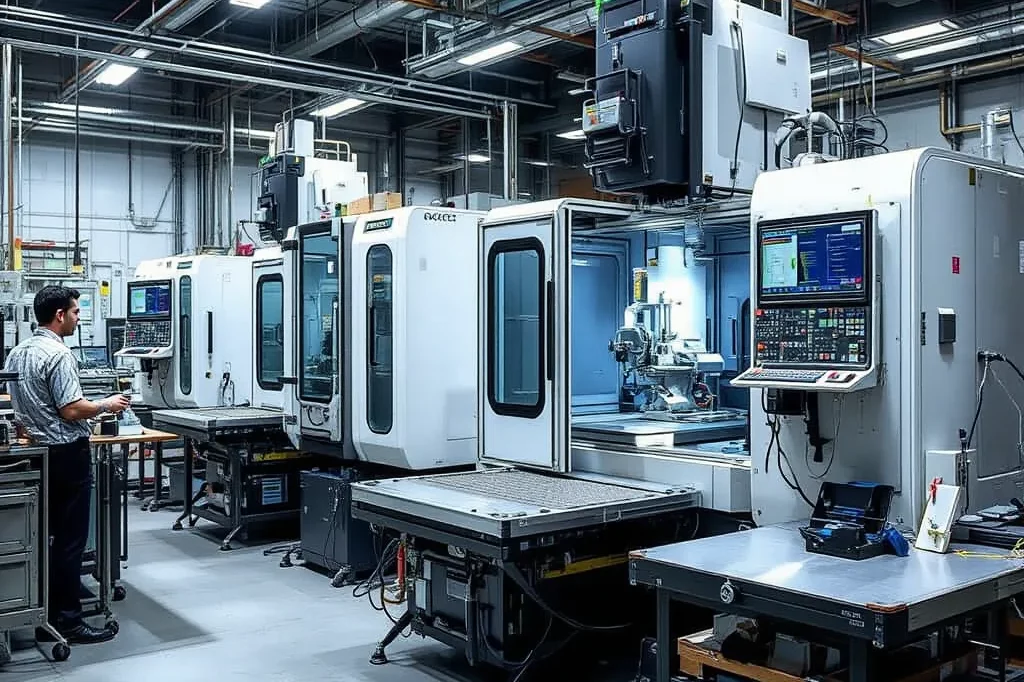

Process Optimization through AI-Supported CNC Controls
The integration of artificial intelligence (AI) into CNC control systems marks a significant turning point in modern manufacturing. This innovative technology not only revolutionizes the way machine tools operate, but also optimizes the entire production chain. The following article highlights the various aspects and benefits of AI-supported CNC controls.
Fundamentals of AI Integration in CNC Systems
The implementation of AI in CNC control systems is based on complex algorithms and machine learning. These systems continuously analyze process data such as cutting speeds, tool wear, and material behavior. By processing this information, the controls can independently make adjustments and generate optimization suggestions. The AI learns from each manufacturing process and continually improves its decision-making. This leads to a significant increase in process efficiency and a reduction in waste. Adaptive control makes it possible to adjust manufacturing parameters in real time and respond to unforeseen situations.
Benefits of AI-Supported Process Optimization
Integrating AI into CNC controls offers numerous advantages for modern manufacturing. Through continuous monitoring and analysis of production processes, tool life can be extended and machine downtime minimized. Precise prediction of maintenance intervals enables proactive maintenance, which reduces unplanned downtime. In addition, AI automatically optimizes machining parameters, resulting in improved surface quality and higher dimensional accuracy. The self-learning systems continuously adapt to new materials and machining strategies, thereby steadily enhancing production efficiency.
Practical Implementation and Challenges
Successfully integrating AI into existing CNC systems requires careful planning and preparation. First, the existing machines must be equipped with appropriate sensors and data acquisition systems. Implementing the AI software and training operating personnel are other crucial steps. One particular challenge is data security, as AI systems process large quantities of sensitive production data. The implementation of appropriate security concepts and regular system updates are therefore essential. Integration into existing production workflows and adaptation of work organization must also be meticulously planned.
Future Perspectives of AI-Supported CNC Manufacturing
The development of AI-supported CNC controls is advancing continuously. Future systems will operate even more autonomously and be capable of making more complex decisions. The integration of advanced visualization technologies such as augmented reality will further enhance human-machine interaction. Networking multiple machines into intelligent production systems will also increase. This development leads to further optimization of manufacturing processes and increased productivity. AI systems will increasingly be able to independently plan and control entire manufacturing operations.
Industry Case Study
CNC Center Northeim GmbH relies on state-of-the-art CNC control technology and continuously invests in the development of its manufacturing processes. With an extensive machine park equipped with the latest control systems, the company ensures the highest precision and efficiency in production. The integration of AI-supported systems enables the company to manufacture complex components for various industries such as medical technology, optics, and aerospace with the highest accuracy. Through continuous process optimization and the use of cutting-edge technologies, the company remains competitive and can flexibly respond to customer requirements.