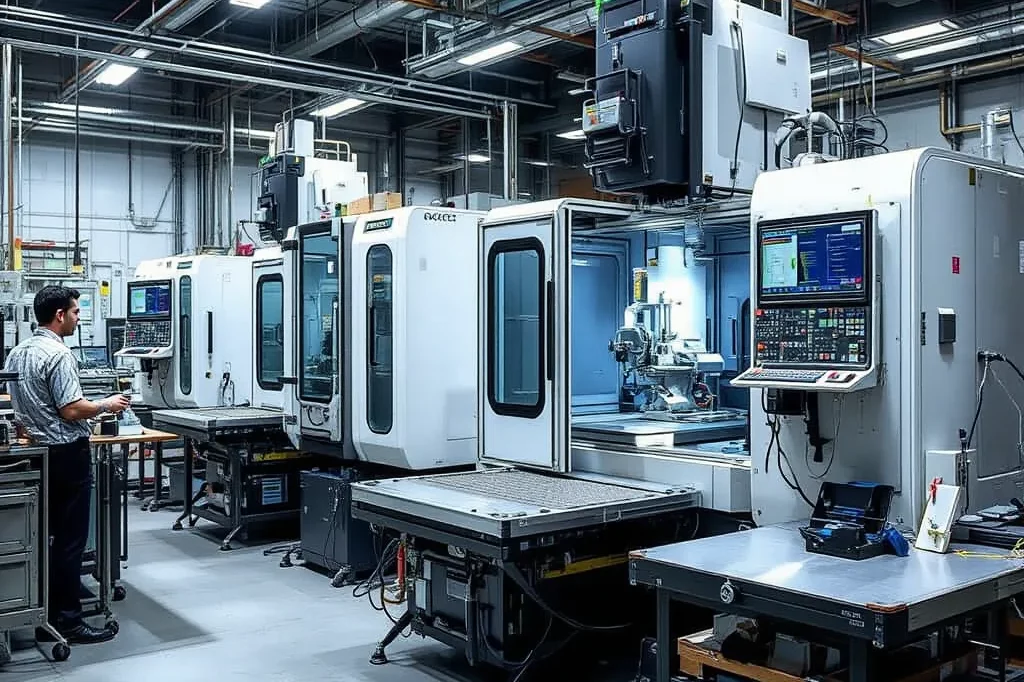

Innovative Cooling Concepts for Sustainable CNC Machining
CNC machining of metals and other materials requires efficient cooling concepts to optimize both the quality of workpieces and the lifespan of tools. In recent years, more and more sustainable solutions have been established that not only protect the environment but also offer economic advantages. This article highlights the latest developments in cooling concepts for CNC machining.
Traditional Coolants and Their Challenges
Conventional cooling lubricants based on mineral oil have long been the standard in CNC machining. While these coolants fulfill their basic function of heat dissipation and lubrication, they come with significant drawbacks. Disposal of used coolants is costly and harmful to the environment. They can also pose health risks to employees, such as through aerosol formation or skin contact. Regular maintenance and replacement of coolants lead to additional operating costs and machine downtime. These factors have driven the development of alternative cooling concepts.
Minimum Quantity Lubrication (MQL) as an Efficient Alternative
Minimum quantity lubrication represents a major advancement in sustainable CNC machining. In this method, a very small amount of lubricant—typically less than 50 ml per hour—is delivered as an aerosol directly to the cutting zone. The benefits are impressive: the consumption of coolants is reduced by up to 95%, workpieces remain virtually dry, and disposal costs drop significantly. MQL technology is especially well-suited for machining aluminum and various types of steel. Targeted application of the lubricant also results in better surface quality and longer tool life.
Cryogenic Cooling as a Technology of the Future
Cryogenic cooling represents a particularly innovative solution. In this technique, liquid nitrogen or carbon dioxide with temperatures as low as -196°C is used for cooling. This technology offers several key advantages: the extreme cooling enables higher cutting speeds and thus increased productivity. The gases used evaporate without leaving any residue, eliminating the need for disposal. Cryogenic cooling proves especially advantageous when machining hard-to-cut materials such as titanium or nickel-based alloys. Although initial investment costs for this technology are higher, they are offset by lower operating costs and increased productivity.
Dry Machining and Optimized Tool Geometries
Another approach is the complete elimination of coolants through dry machining. This requires special tool coatings and optimized cutting geometries that ensure efficient chip removal and heat dissipation. Modern coatings based on aluminum oxide or titanium nitride allow higher temperatures at the cutting edge without damaging the tool. Dry machining not only minimizes environmental impact but also simplifies the recycling of chips, as they are not contaminated with coolants.
Integration into Modern Manufacturing
CNC Center Northeim GmbH relies on innovative cooling concepts in CNC manufacturing with a strong focus on sustainability. With a modern machine fleet that includes both MQL systems and the capability for dry machining, the benefits of these forward-looking technologies are fully utilized. The company’s expertise in precision machining of various materials is further enhanced by the use of these advanced cooling concepts.