
Efficient Energy Use through Modern Drive Technology
In times of rising energy costs and growing environmental awareness, efficient energy use in industrial manufacturing is becoming increasingly important. Modern drive technology plays a key role in this and offers significant savings potential.
Fundamentals of Modern Drive Technology
Modern drive systems are based on highly efficient electric motors, intelligent control technology, and innovative energy recovery systems. Combining these components can significantly reduce energy consumption compared to conventional drives. Particularly noteworthy are frequency-controlled drives, which can adjust their output based on demand.
Energy Efficiency Classes for Electric Motors
The European Union has established important standards with the introduction of energy efficiency classes for electric motors. The classification ranges from IE1 (Standard Efficiency) to IE5 (Ultra Premium Efficiency), with higher classes representing better energy efficiency.
Advantages of High-Efficiency Motors:
- Lower energy consumption
- Reduced operating costs
- Lower CO2 emissions
- Longer service life
- Lower maintenance costs
Intelligent Control Systems
Modern control systems optimize energy consumption through precise regulation of drive power. They enable demand-oriented energy supply and can balance load peaks. Integrated energy management systems continuously monitor consumption and identify potential savings.
Energy Recovery in Drive Technology
An important aspect of modern drive systems is their ability to recover energy. During braking or deceleration of machines, kinetic energy can be converted into electrical energy and either fed back into the power grid or stored temporarily. This significantly increases the overall efficiency of the system.
Applications of Energy Recovery:
- Elevator systems
- Conveyor systems
- Machine tools
- Packaging machines
- Production robots
Practical Implementation in Industry
The practical implementation of energy-efficient drive technology requires careful planning and analysis of specific requirements. Factors such as load profiles, operating times, and environmental conditions play an important role. Modern simulation tools help design optimal drive solutions.
Cost-Effectiveness and Payback
Investment in modern drive technology usually pays off within a few years through saved energy costs. In addition, many countries offer government subsidies for energy-efficient technologies.
Practical Example from CNC Manufacturing
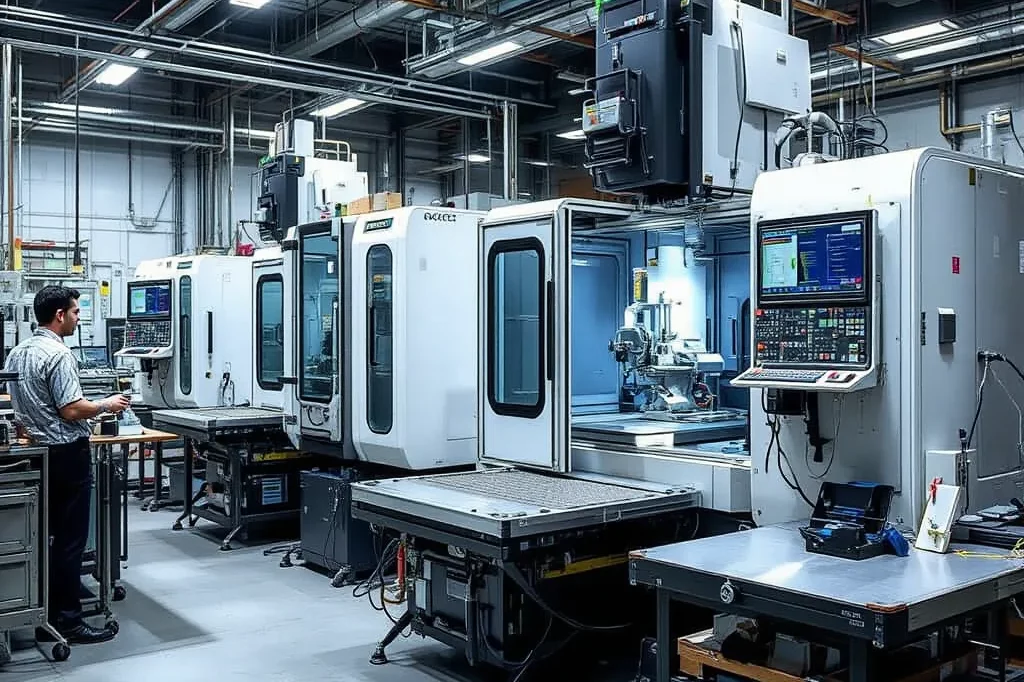
The CNC Center Northeim GmbH consistently employs energy-efficient drive technology in its modern machine park. The CNC machines in use feature high-efficiency drive systems with energy recovery and intelligent control technology. Through these investments in modern technology, the company not only contributes to environmental protection but also achieves significant cost savings in the production process.