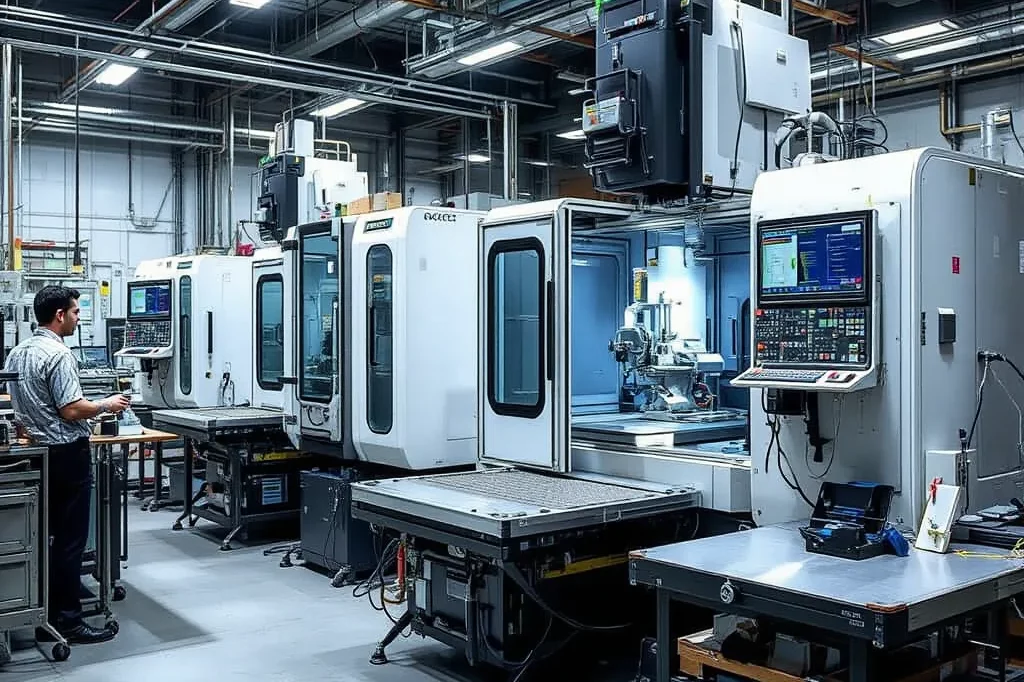

CNC-Assisted Quality Control: Setting New Standards in Metrology
The modern manufacturing industry is facing increasingly higher demands for precision and quality. CNC-assisted quality control has established itself as an indispensable tool in meeting these requirements. The integration of computer-assisted measurement systems is revolutionizing the way quality assurance is implemented in manufacturing.
Fundamentals of CNC Metrology
CNC measuring machines operate based on the principle of coordinate-based metrology. Workpieces are measured using high-precision sensors and probes, with the machine automatically targeting various measuring points. The collected data is processed in real time and compared with the nominal values. Modern measuring machines achieve accuracies in the micrometer range and are capable of capturing complex geometries such as freeform surfaces, bores, and contours. Measurements are conducted either contactlessly or tactilely, depending on the specific requirements of the workpiece.
Advantages of Computer-Assisted Quality Control
The integration of CNC technology into quality control offers numerous advantages over conventional measuring methods. Automating measurement processes not only saves time and costs but also significantly improves the accuracy and reproducibility of measurements. Computer-assisted analysis additionally enables comprehensive documentation of all measurement results and their statistical evaluation. This is particularly important for process optimization and for meeting quality management standards such as ISO 9001.
Integration into the Manufacturing Process
A key aspect of CNC-assisted quality control is its seamless integration into the manufacturing process. Modern measuring systems can communicate directly with CAD/CAM systems, enabling a consistent digital workflow. Measurement data is fed directly into process control and allows for rapid corrections in the case of deviations. This real-time monitoring of production quality reduces scrap and optimizes production efficiency. Moreover, the collected data can be used for the continuous improvement of manufacturing processes.
Current Developments and Trends
Metrology is continuously evolving, with current trends focusing especially on increased automation and connectivity. Artificial intelligence and machine learning are increasingly being used to analyze measurement data and suggest process optimizations. The integration of Industry 4.0 concepts allows for full networking of quality assurance with other business areas. The development of in-line measuring systems that are directly integrated into production lines is also gaining importance.
Practical Application in Industry
CNC Center Northeim GmbH demonstrates impressively how modern metrology is successfully applied in practice. With high-precision measuring machines such as the Mitutoyo Crysta-Apex series and state-of-the-art CAQ software, the company ensures the highest quality standards in production. Continuous quality control and documentation enable the company to meet the increasing demands of industries such as medical technology, aerospace, and semiconductor manufacturing, and to further strengthen its position as a reliable partner for high-precision manufacturing solutions.